2026 season updates & winter reflections
by crescent
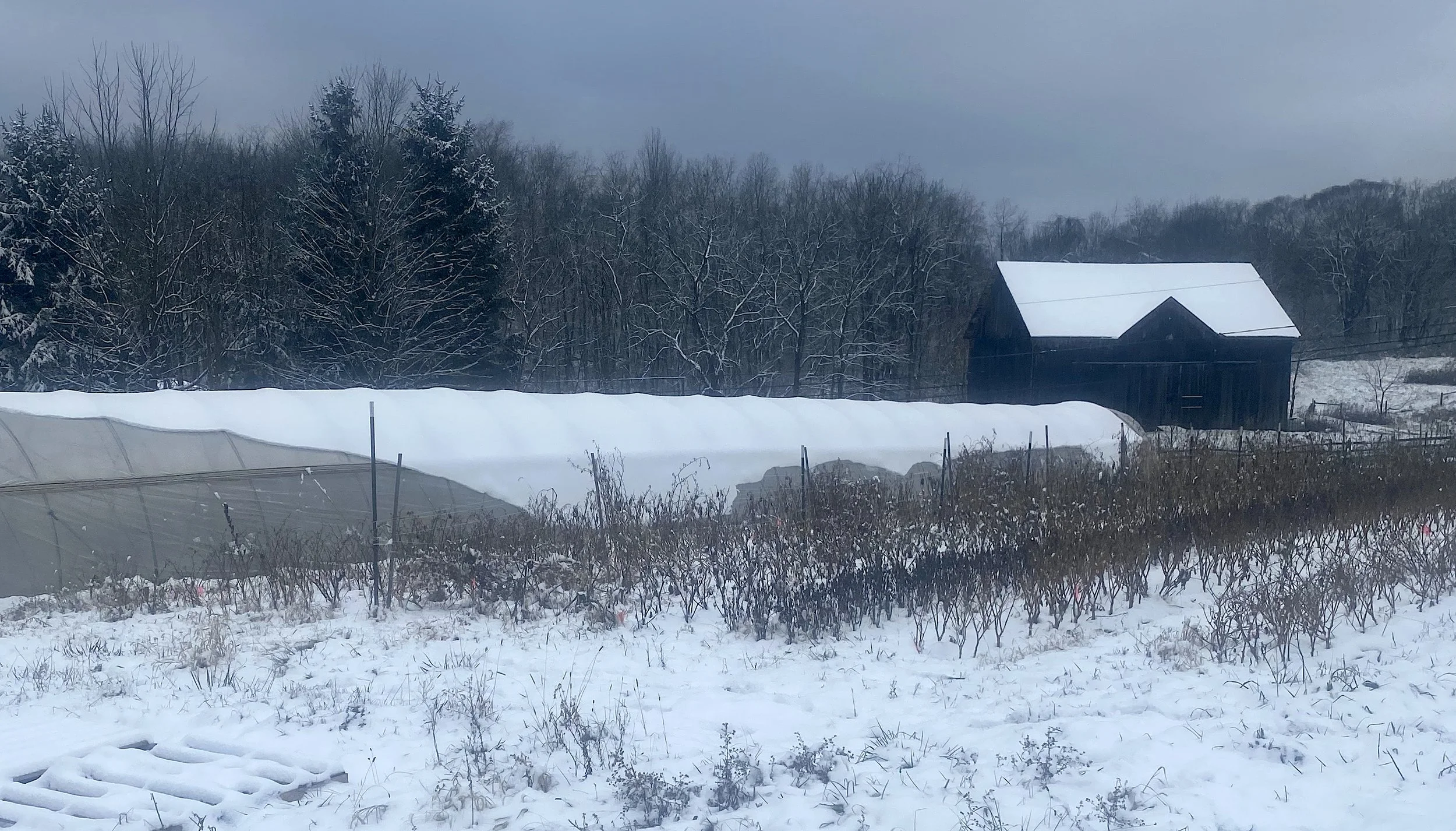
In the belly of winter, with the biggest snow we’ve had in over a decade, we’re deep in reflection and planning mode. We’re dreaming and scheming our way forward, towards a growing season that will look very different from seasons past. With the weight of this heavy snow, we’re also feeling deeply the grief and rage stoked by increasingly blatant escalations of state violence. Though this violence is only verifying and making more obvious what we already know about systems built on exploitation, control, and inequity, it is a visceral reminder of the importance of committing to our community values of interdependence, collective care, and sustainability in everything we do.
We’ve found fulfillment in community agriculture, particularly because of the ways that farming involves us more tangibly in the means of our material survival, and our dependence on each other and the earth. We cultivate this interdependence within a small-scale operation, endeavoring to regenerate the land through cultivation, rather than erode it. Through this work, we practice keeping each other safe, fed, and well-resourced through every coming wave of climate change, of economic volatility, and of state-sponsored systems of oppression.
In the case that it needs to be stated more frankly here, we value and care for our migrant neighbors as integral community members. We vehemently oppose the kidnapping, abuse, and murder that immigration enforcement agencies continue to perpetrate. These tactics are not new, and we will personally continue to engage in community support, direct action, and advocacy wherever we can. We know and affirm that all workers, especially migrant workers (who make up the largest contingent of farm workers in the US), deserve safety, respect, fair pay, and security in their places of work and residence. Though there are many employers, neighbors, and organizations who support their migrant community members in these ways, the systems in this country largely do not, and that must change.
While we don’t work directly alongside migrant farm workers, they are vital members of our local and global communities and we are unwaveringly in solidarity and interdependence with all communities resisting and fighting for their own safety and autonomy. Though this can feel amorphous at times, we are showing up in the ways we can in our own neighborhoods, and our individual efforts are not for detailing here. Growing food is one of the tangible ways that we endeavor to directly support the communities we are connected to, and we’re getting clearer on how to best do that. We are continually working to shape and participate in local food systems that are not so dependent on or bolstering to the profits of giant oil, fertilizer, transportation, and tech companies.
Resilient local food systems feed some of our most basic needs and those of as many neighbors as we can reach. And here lie two (or three) of the major challenges with small-scale agriculture these days. Sustainable scale of production (1) and the associated scope and logistics of food distribution (2), are frustratingly somewhat dictated by access to capital (3) under the current economics that control most human material needs in the modern day. Stated more plainly, though our labor and collaboration with the earth are the main fuels for the food we grow and eat and share with you all, we have to lease land, buy seed, build and maintain greenhouses and fencing, fuel harvest and delivery vehicles, and much more, to produce food and get it into peoples’ kitchens. The volume and diversity of food we can grow and neighbors we can reach is limited in many ways by these materially limiting factors.
We’re spending a lot of time and care behind the scenes this winter, to address these three major challenges, in order to make strides towards shaping a more sustainable future for this farm, and hopefully a more resilient local food ecology. First, in regards to sustainable scale, we’re honing the diversity of crops we produce to a scope that is reasonable for our labor capacity and the environmental, ecological, and climate factors of our fields. We love growing a wild array of vegetables, herbs, and flowers for ourselves and the communities we serve. But not everything grows well in our fields, and some of our badass farmer friends are growing larger quantities of some of these things in our region. Rather than trying to fill every niche ourselves, we’re working to collaborate and coordinate with other farms in the region, to support access to full diet local offerings. This will hopefully allow us to not only bolster the sustainability and success of other farms in our ecology, but also provide our communities access to a diverse diet of local food in one place. So what does this look like?
This brings us to challenge number two, scope and logistics of food distribution. It takes a lot of labor, materials, and time to bring all of our offerings to the farmers market each week, and we can’t guarantee that it will all go home to someone’s kitchen or that our customers can all make it to the market to access our food. Fresh vegetables don’t stay fresh forever, and the open air market on a hot day is not always the most ideal distribution setting for some of our key crops. We love the Bloomfield farmer’s market and it has been our home base for a decade. But rather than expand to additional markets to improve access and distribution, we’re introducing a hybrid distribution model involving an online farm store with weekly pickup and delivery options and select seasonal farm stands at the Bloomfield farmers market. This model addresses several of the distribution challenges facing small farms. It will allow us to harvest fresh produce in the right amounts each week, and coordinate movement of any excess into mutual aid food distros. It’ll allow us to offer staple foods that we don’t produce, such as potatoes and pork, and thus allow customers to access a more diverse range of options in one place. It will allow us to accept SNAP benefits for online orders. It’ll open up home delivery options within the radius of our existing wholesale delivery route. And it’ll allow us to embrace a community supported agriculture model where customers can opt to pay for membership credits to our online store ahead of time, while preserving consumer choice as to when and what you order with those credits. These memberships come with a discount and home delivery options, don’t require you to order each week, and lend up-front financial support to the production of our crops.
This last bit leads us to challenge number three – access to capital. We are a group of scrappy and hard-working people with supportive families and friends, but without much capital. We personally and collectively prioritize working in values-aligned trades and cultivating resources that keep our costs of living low. While we could take out loans, apply for lines of credit, or sell-out for better paying lines of work, we don’t believe that’s the path to aligning this work with our values, and those of the communities that have supported and benefitted from this work for the past decade. We’ve been lucky enough to access a few grants to help with infrastructure costs over the years, have applied for a few this year and are waiting to hear if we’ll be recipients of these grants. Megan has always run this business with an approach of reinvesting profits back into the operational costs and growth of the farm. But grant funding streams are disappearing and the slim margins of profit reinvested into future growth often come at the cost of underpaid and overworked farmers.
This is not how we want to operate, and we’re giving a lot more care and attention to rebalancing how we carry the weight of this agricultural project, physically and financially. What does that even look like? We’re leaning further into the redistribution of labor, collective decision making, and shared financial responsibility by forming a cooperative. Okay so who’s we, you ask? Currently the brains and bodies behind the schemes are myself (crescent), Megan, Christine and Sarah, with the support and advice of beloved be.wild.er crew of the past many seasons. With years of collective experience and lessons learned, we’re building on a strong foundation of mutual care, trust, responsibility, and accountability to each other and to the communities we serve. Personally, I’m immensely grateful for the chance to step into shared stewardship of the resources, infrastructure, and skills Megan and the larger community surrounding bewilder have cultivated over the past decade. The story of my personal journey into farming as a lifeway is for another time. But I truly feel as though I’m standing on the shoulders of giants, in this cultivation of collaborative leadership. We’re not starting from scratch, and our collective capacity opens up so much potential for the abundance that can be regenerated and shared through the resources of this farm. And our collective capacity includes you all!
So what are we asking of you? Mainly, we are asking for your continued support. Buy and eat our veg when it’s harvest season once again. While we have some funds from last seasons’ sales to get us started for this season, it’s not enough to cover early season expenses that come before we have anything to harvest and offer to you. That includes seeds, potting soil, greenhouse maintenance, fence repair, irrigation, and much more. Though we will make some of this back when we start slinging produce, we don’t want to start the season off at a deficit, and instead want to invest in the longevity of the farm, and use this season as a jumping off point, to involve more people in new systems in future seasons. There are a lot of great resources out there that explain (in more detail than I can here) how most of the loans, credits, and even subsidies available to farmers benefit the banks and giant corporations more than the farmers, and don’t contribute anything to the long-term sustainability of our food systems. We’ll leave the more eloquent and evidenced explanation of that to our friends involved in farm advocacy, but we’re working carefully to embrace what is a more sustainable and held in common resource – community support.
You can help us with this aim by supporting one of our fundraising efforts:
By popular request, we’re doing another round of printing of the EVERY BODY EATS hoodies. You can find the order form with all the relevant details here.
We’re also throwing a fundraiser party on February 27th in collaboration with Desert Hearts at Glitterbox Theater! We’ll be raffling off some sweet items from beloved community craftspeople and chefs, dancing, dishing, and scheming for the coming of spring. Find more details in the flyer below, and spread the word. If you’re interested in donating an item to the raffle, reach out to us through this form.
Keep your eyes out for more details and the opening of our online farmstore later this winter, when you can buy membership credits if you’re able and interested in eating our produce all season long.
If you’re a community member who’s volunteered on-farm in the past or is interested in participating in the farm in this way, keep your eyes out for details regarding veg share work-trade in early spring.
We’re putting on a big seedling sale this year! Look out for our veg, herb, and flower seedlings this spring to incorporate into your own garden, and support our in-season production with your seedling purchases.
Finally, if you ever wanna throw us a couple bucks just because, there’s a tip jar on our farmstore you can visit anytime. While we operate as a business, we run things as if farming is community service, because food is a human right and material need that should be held in the commons. We pay ourselves very humble hourly wages from the sale of our produce and do a lot of unpaid labor to keep the farm going. We’re not in this for profits, and we’ll never ask for your support for anything other than the collective community resilience we endeavor to cultivate through this agricultural project.
Stay tuned for more updates regarding the launch of our online farmstore, dates for our seasonal farm stand pop-ups, seedling sale offerings, work-trade sign-ups, collaborations with other farms and restaurants in the region, and much more. The road is winding and bumpy, but we love growing food for the greater Pittsburgh area and hope to continue to do so for many years to come. Thank you for meeting us here.
With care & gratitude,
crescent & the wilder be’s