winter solstice reflections & musings
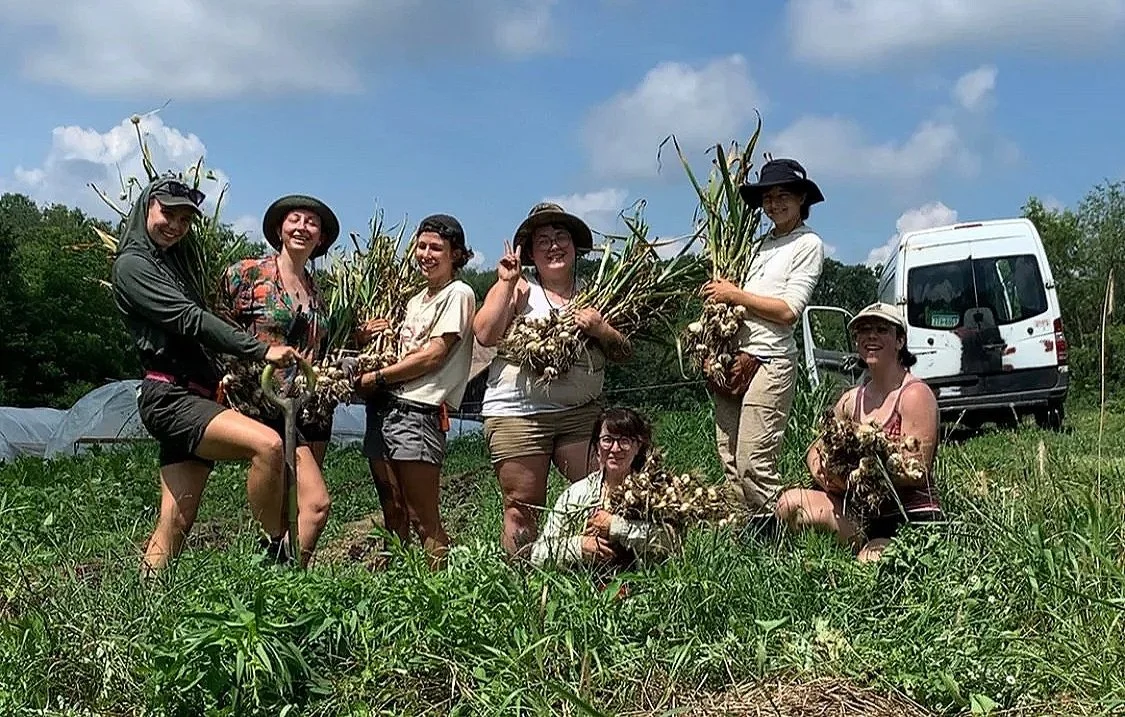
As we go through the portal of the longest night, we finally have some semi-metabolized morsels of reflection to share about the growing season we’ve just closed. The 2025 growing season was the beginning of an arc of greater transformations for bewilder. We took some big strides toward operating more cooperatively, as Megan (our founder & farmer-owner) started a new position elsewhere within the Pittsburgh farming community and many of us stepped up into collaborative management roles in the day-to-day operations of bewilder. We grew thousands of pounds of beautiful, delicious veg that fed hundreds of people, including us. We opened a new flower field & repaired & built high tunnels. We discovered new learning edges, worked on new communication systems, and cultivated soil tilth and ecology in several new fields. The season was a success in many regards and it was also profoundly difficult in many ways.
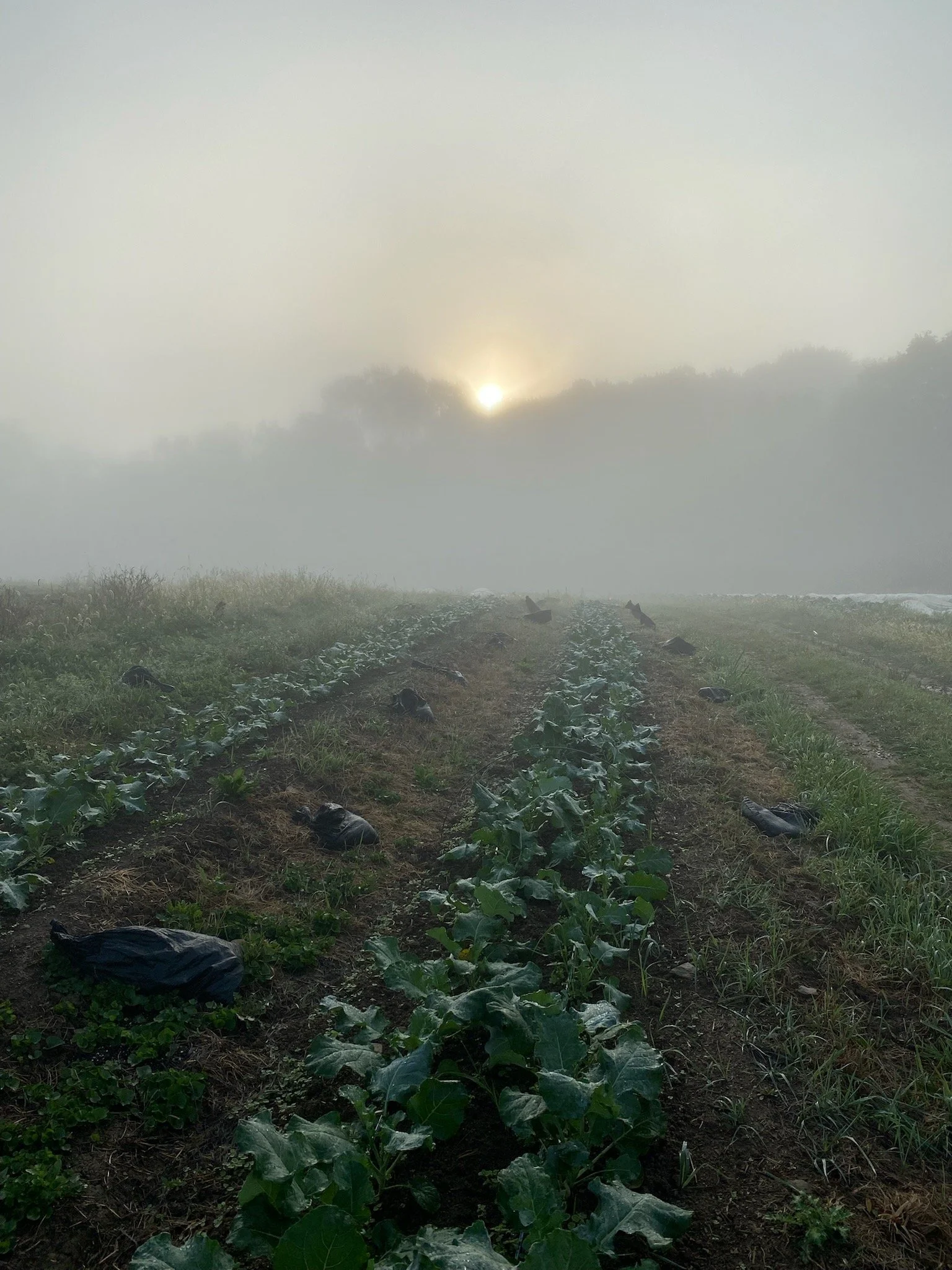
The spring storms tore through our tunnels & we spent weeks repairing & reinforcing them in between all of the spring field prep & planting. The summer rains seemed never-ending and fungal plant pathogens crept up in their wake. Though we grow in terraced beds on contour with a gentle slope, which are more resilient to flooding than fields that sit in the valley, there were weeks at a time when it was too wet to work the soil with our hand tools & walk-behind tractor. When the rains did stop, it was high heat days and over a month of drought. New fields came with new critter browsing patterns and the groundhogs and rabbits enjoyed a hearty portion of the summer and fall squash. We staved off the tomato disease as long as we could, but ultimately the tomatoes succumbed to it faster than we hoped they would. In the fall, we had a beautiful explosion of abundance, both delayed and accelerated bounty that we struggled to move on pace with crops’ harvest windows.
Farming is a tumultuous and wondrous dance with wild weather patterns and ecological changes that we as humans are still dependent on, despite living in a society that largely forces disconnection from the earth and extrapolates our means of survival into incomprehensible systems of extraction and exploitation at every turn. We often have to remind ourselves, “it’s just vegetables”, when the field work gets overwhelming, when we don’t sell as much as we hoped at market, when there’s not enough money in the farm bank account, when the heat makes it too dangerous to stay in the field for a full day or it feels like we’re drowning in weeds. It is just vegetables, and yet, it’s as meaningful as it is simple. Like most farmers, none of us got into this line of work to make money. The wages are humble, the work is hard, and having enough money to continue growing into another season is usually on account of someone not paying themselves for all of their labor, be it field work, administrative, marketing, logistics, or fixing whatever recently broke unexpectedly because something is always in need of repair.
Small farmers are scrappy (and maybe a bit delusional) and care deeply about their work. We indulge some amount of romanticizing our crafts, even though they are at times grueling and thankless, because it helps us stay connected to the parts of it that anchor our wonder, gratitude, and respect for the natural world we get to inhabit together. Because feeding ourselves and countless others with the hard work of our hands, especially as settlers and guests on stolen and borrowed land, is an honor and a privilege. It is as much about stewardship and reciprocity as it is about making a living. Endeavoring to make a living farming without extractive or exploitative methods is incredibly challenging, in an economy that increasingly values materially hollow digital and physical assets over the earth and the material means of our survival and well-being.
The grant funding that once brought a spike in support of small regenerative agriculture, has been rapidly limited in the last year or so, and those that remain are more competitive as many more small farms are applying for the same few streams of funding. The generation of farmers that make up the vast majority of domestic, large-scale food production are retiring and selling off their land for development, and the migrant farmers they employ are being kidnapped by secret police at terrifying rates. A lot of young farmers are leaving the game because, understandably so, they need more stability than this field can offer them in such tumultuous times. They’re participating in the food system in other important roles in the industry like distribution, ag policy, and education. But we still need producers to stay with the trouble and cultivate local food production that is resilient to all of the waves of change we’re staring down, ready or not. We’re writing to you as some of these young(ish) farmers with hands in the dirt, intention to stay with the trouble, and ideally to continue to find the joy in it. Despite the pressures all around us to let fear discourage us from taking risks, we are continuing to explore the path of transforming this little farm into a cooperative, further diversifying our production, and scaling our labor to a pace that is human and sustainable.
One of the risks that we’re aligning with our values is the somewhat nerve-wracking act of letting our communities know that we’re confronting major change and the struggles that accompany it, and inviting people into holding the value-rooted risks with us, where possible. We’re aware that the bootstrap & grind culture that is alive & well in the agriculture scene is a product of white supremacy culture that pushes people to exploit themselves or others in the name of hollow notions of growth. We don’t want to buy into that culture, and that means reassessing and asking for help when the slope is too steep. We will be sharing about our process transitioning this sole-proprietor farm into a coop. We’ll invite people to take on the risk/reward of growing food with us through new outlets for accessing the produce we grow. And we’ll be asking more of what you all want to receive & give & learn through this agricultural project. More details on all of that soon.
But for now, as we turn our heads towards the longing of the light, and the work & growth to come, we most of all want to express our gratitude. Whether you’re new here or have been with us from the beginning, thank you. If you’ve bought our veg at market, work-traded at the farm, imbibed at one of the local restaurants that we supply, lent a tool, bought a t-shirt, shared a post — all of it is important to the choreography of this breathing operation we’ve been chugging along & it means so much to us. We say in our community agreements that, though this is a vegetable farm, it’s about the people and the relationships more than anything. And what we’re hearing from this moment, a murmur in the threads that root our spines to the earth, is that now is the time to double down on these people-centered values. To participate in our ecologies & communities in reciprocal care & tend resilience in these connections. Thank you for meeting us here & happy solstice.
with great care & gratitude,
xxxxxxxx
crescent & bewilder crew